Global Halal Tourism: Latest Trends and Market Growth
Tourism is one of the largest and fastest-growing industries in the world, contributing significantly to global economic development. Within this vast industry, halal tourism has emerged as one of the most dynamic and rapidly expanding segments. Halal tourism refers to travel services and experiences that are designed to meet the needs of Muslim travelers by following Islamic principles and guidelines. These services typically include the availability of halal food, prayer facilities, modest recreational environments, and family-friendly accommodations.
As the global Muslim population continues to grow, so does the demand for travel experiences that align with Islamic values. Muslim travelers are increasingly seeking destinations that respect their religious practices while offering high-quality tourism experiences. As a result, many countries—both Muslim-majority and non-Muslim-majority—are recognizing the economic potential of halal tourism and investing in Muslim-friendly infrastructure.
Today, halal tourism is not only a niche market but a major component of global travel. Recent reports show that millions of Muslim travelers are exploring destinations worldwide, contributing billions of dollars to the tourism economy. Understanding the growth, trends, opportunities, and challenges of halal tourism is therefore essential for policymakers, businesses, and tourism professionals alike.
Understanding Halal Tourism
Halal tourism is a form of travel that accommodates the religious needs of Muslim travelers. The word “halal” means permissible in Islamic law, and halal tourism ensures that services provided during travel comply with these religious guidelines.
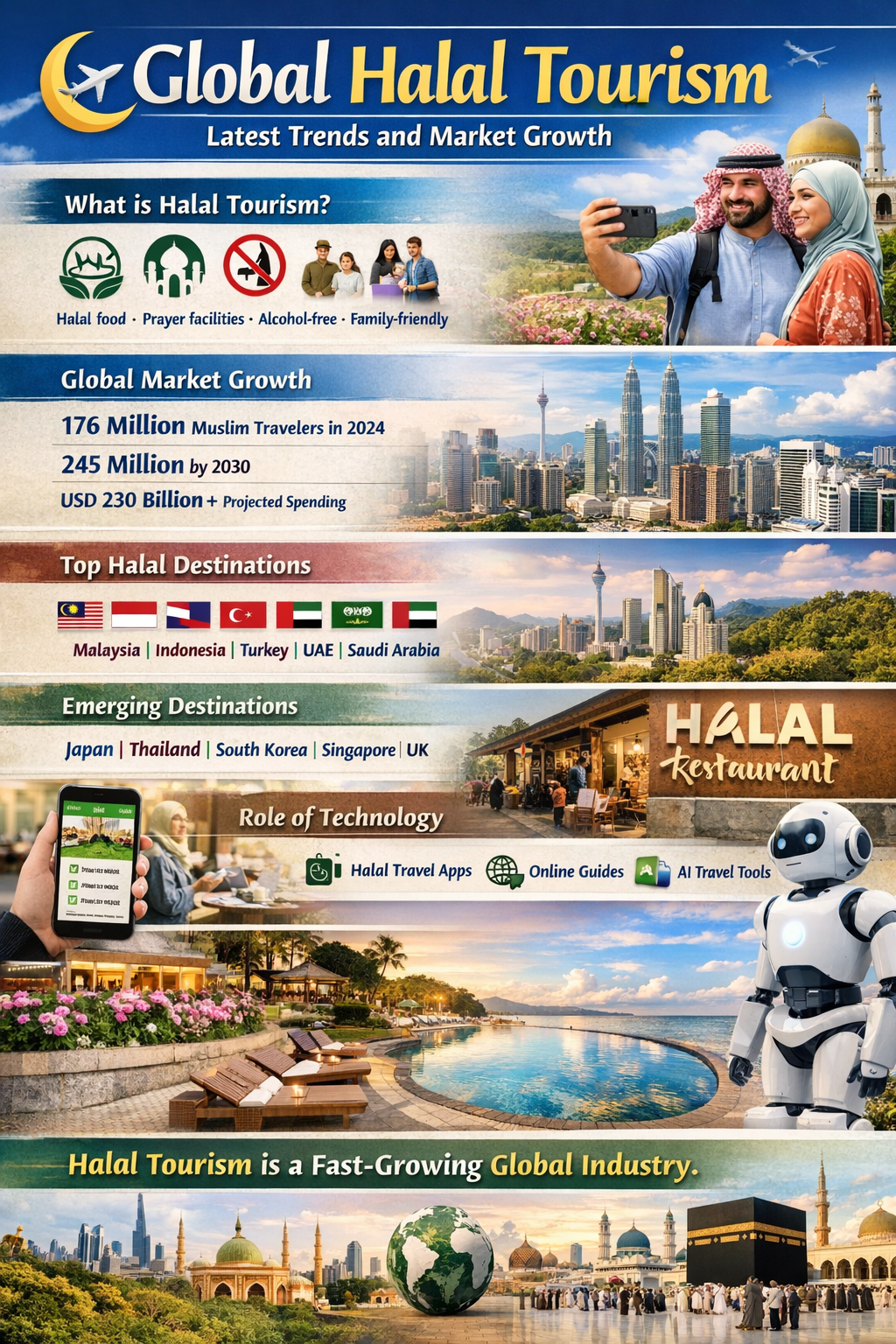
Several key features define halal tourism. First, halal-certified food must be readily available. Muslim travelers must be able to access meals that are prepared according to Islamic dietary laws. Second, prayer facilities are often provided in hotels, airports, shopping centers, and tourist attractions to allow travelers to perform their daily prayers. Third, some halal-friendly hotels offer alcohol-free environments and provide separate recreational facilities for men and women.
Another important aspect of halal tourism is family-friendly travel. Many Muslim travelers prefer destinations that provide safe and respectful environments suitable for families. Modest dress codes, privacy-friendly accommodations, and culturally sensitive entertainment options can enhance the experience of Muslim tourists.
It is important to note that halal tourism does not exclusively target Muslims. In many cases, halal tourism services appeal to a wider audience interested in ethical, family-friendly, and culturally respectful travel experiences.
Growth of the Global Halal Tourism Market
In recent years, halal tourism has experienced remarkable growth. According to recent global travel reports, Muslim international travel has increased significantly following the recovery of the tourism sector after the COVID-19 pandemic. In 2024, the number of Muslim international travelers reached approximately 176 million, reflecting a strong rebound in global travel.
Experts predict that this number could rise to around 245 million Muslim travelers by 2030. Alongside this increase in travel activity, spending by Muslim tourists is also expected to grow rapidly. Estimates suggest that Muslim travel expenditure may reach approximately 230 billion US dollars by the end of the decade.
Several factors are contributing to this growth. One of the most significant drivers is the increasing global Muslim population. Muslims currently make up a large and growing share of the world’s population, particularly in regions such as Asia, the Middle East, and Africa. As economic conditions improve in many of these regions, more Muslim consumers are gaining the financial ability to travel internationally.
Additionally, younger generations of Muslim travelers are more adventurous and digitally connected. They are increasingly interested in exploring global destinations while maintaining their religious practices. Social media, travel influencers, and online travel platforms have also played a major role in promoting Muslim-friendly tourism destinations.
Key Drivers of Halal Tourism Expansion
Several important factors are driving the expansion of halal tourism worldwide.
First, the rise of the Muslim middle class has increased demand for international travel. As incomes grow in many Muslim-majority countries, more individuals and families can afford leisure travel.
Second, governments are recognizing the economic potential of attracting Muslim tourists. Countries that invest in Muslim-friendly services can tap into a large and growing market segment. As a result, many tourism authorities are promoting halal tourism as part of their national tourism strategies.
Third, the availability of halal-certified products and services has expanded globally. Restaurants, hotels, airlines, and travel agencies are increasingly offering halal-certified options that meet the needs of Muslim travelers.
Finally, technological advancements have made travel planning easier than ever before. Mobile applications and online platforms now allow travelers to easily find halal restaurants, nearby mosques, and Muslim-friendly accommodations when visiting new destinations.
Leading Halal Tourism Destinations
Several countries have established themselves as leaders in halal tourism. Among the most recognized destinations are Malaysia, Indonesia, Turkey, the United Arab Emirates, and Saudi Arabia. These countries provide well-developed halal infrastructure, including halal-certified restaurants, prayer facilities, and Muslim-friendly accommodations.
Malaysia is frequently ranked among the top halal tourism destinations in the world. The country has invested heavily in halal certification systems and tourism marketing strategies that target Muslim travelers.
Indonesia, home to the world’s largest Muslim population, has also developed numerous halal tourism initiatives, particularly in destinations such as Lombok and West Sumatra. Turkey attracts Muslim travelers through its rich Islamic history, cultural heritage, and modern tourism facilities.
The United Arab Emirates, especially Dubai, has become a global tourism hub that offers luxury travel experiences while maintaining strong halal-friendly services. Saudi Arabia, meanwhile, continues to attract millions of Muslim visitors each year for religious pilgrimages such as Hajj and Umrah.
Growing Interest from Non-Muslim Countries
One of the most interesting developments in halal tourism is the increasing participation of non-Muslim-majority countries. Nations such as Japan, Thailand, South Korea, Singapore, and the United Kingdom are actively working to attract Muslim tourists by adapting their tourism services.
For example, many restaurants in Japan now provide halal-certified meals or clearly label halal-friendly food options. Airports and shopping malls in several Asian countries have introduced prayer rooms for Muslim travelers. Some hotels have also started offering prayer mats, halal food menus, and information about nearby mosques.
These initiatives demonstrate how halal tourism is becoming a global phenomenon rather than being limited to Muslim-majority regions. By accommodating the needs of Muslim travelers, these countries can expand their tourism markets and create more inclusive travel experiences.
Economic Impact of Halal Tourism
Halal tourism has significant economic benefits for many countries. As Muslim travelers spend money on accommodation, transportation, food, shopping, and entertainment, they contribute to the overall growth of the tourism industry.
The development of halal tourism also supports the growth of related industries, such as halal food production, hospitality services, and tourism marketing. This can create employment opportunities in sectors such as hotels, restaurants, travel agencies, and transportation services.
In addition, halal tourism encourages infrastructure development, including improved airports, hotels, tourist attractions, and transportation networks. These improvements benefit both Muslim and non-Muslim travelers.
Challenges in Halal Tourism Development
Despite its strong growth, halal tourism also faces several challenges. One of the main challenges is the lack of standardized global halal certification systems. Different countries and organizations may use different standards for halal certification, which can create confusion for travelers.
Another challenge is limited awareness among tourism providers in some destinations. Hotels, restaurants, and tourism operators may not fully understand the specific needs of Muslim travelers, which can lead to inadequate services.
Training hospitality professionals to provide culturally sensitive services is also important. Tourism staff should be knowledgeable about halal requirements and respectful of Islamic practices to ensure positive experiences for Muslim visitors.
Future Opportunities in Halal Tourism
The future of halal tourism appears very promising. As demand continues to grow, new opportunities are emerging across the tourism sector.
Luxury halal tourism is one emerging trend. High-end resorts and travel companies are developing luxury travel experiences that combine premium services with halal-friendly environments.
Islamic heritage tourism is another growing area. Many Muslim travelers are interested in visiting historical Islamic sites, cultural landmarks, and educational institutions.
Eco-friendly halal tourism is also gaining attention. Sustainable travel practices that align with Islamic values of environmental stewardship are becoming increasingly popular among younger Muslim travelers.
In addition, digital innovation will continue to shape the halal tourism industry. Artificial intelligence, mobile travel apps, and digital platforms will make it easier for Muslim travelers to find destinations and services that meet their needs.
Conclusion
Halal tourism has become one of the most rapidly expanding sectors of the global tourism industry. Driven by the growth of the Muslim population, rising incomes, and increasing global connectivity, Muslim travelers are exploring destinations around the world in greater numbers than ever before.
Countries that recognize the potential of this market are investing in Muslim-friendly infrastructure, halal-certified services, and culturally inclusive tourism strategies. Both Muslim-majority and non-Muslim-majority destinations are adapting their tourism offerings to attract this important market segment.
While challenges remain, the future of halal tourism is filled with opportunities. With continued investment, innovation, and collaboration, halal tourism can contribute to economic growth, cultural exchange, and global tourism development.
Ultimately, halal tourism represents not only a growing market but also a movement toward more inclusive and respectful travel experiences that accommodate the diverse needs of travelers worldwide.
Yours sister,
Dr. Thamina Anwar
CEO and Founder
Global Halal Shura Hub
please Join the Global Halal Shura Hub Community
📱 WhatsApp Community
👉 https://chat.whatsapp.com/CZJshg7AycWFJd3CyhSWj3
🌐 Website
https://globalhalalshurahub.com
📧 Email
thaminaanwar11@gmail.com; globalhalalshurahubsocialmedia@gmail.com
📘 Facebook
https://www.facebook.com/profile.php?id=61588247732733
https://www.facebook.com/profile.php?id=61588077462429
📷 Instagram
https://www.instagram.com/globalhalalshurahub/
🔗 LinkedIn
https://www.linkedin.com/in/dr-thamina-anwar-806124145/
https://www.linkedin.com/in/global-halal-shura-hub-dr-thamina-samina-anwar-05418b398/
📺 YouTube Channel
https://www.youtube.com/@GlobalHalalShuraHub